Sunday, October 16, 2011

Vive la Différence!


Each dog is equally adorable and well-dressed, but vastly
different in personality.
"This dog is SO different from my other dog!”  Whether talking about a new dog that followed the passing of a beloved canine or an additional dog in the household, anyone who’s had more than one dog has thought this at one time or another.  It shouldn’t be surprising, but when a new dog looks similar to the former dog or if the dogs are siblings, we tend to expect them to be more alike.  Time, nature, and nurture all create different personalities in our canine companions and that’s what makes them interesting and unique.

Dogs certainly share common behaviors and tendencies as a species, but spending time with a variety of dogs reveals that all dogs are different.  Not all dogs love to play fetch.  Some like to play tug.  Some like to chase.  Some like to just hang out.  Not all dogs like to be touched.  There are dogs that love lots of activity.  There are other dogs that prefer quiet.  Each dog has its own personality and preferences.  And like people, no two dogs are exactly alike.

Many of us try to recapture a part of a well-loved dog who has passed by acquiring a puppy of the same breed, perhaps even from the same breeder.  We want the puppy to be similar to its predecessor, but we forget that most of our memories are based on our best and most recent memories.  It’s easy to forget about housetraining, how Great Aunt Martha’s heirloom quilt was ripped to shreds, or the hours spent training and working on “perfect manners.”  Keeping a puppy from the beloved dog’s litter doesn’t re-create the same dog either, since there is the genetic influence of the other parent as well as a different life experience.  Sometimes, it helps to get a different breed or a different gender to remind us that this is not the same dog.
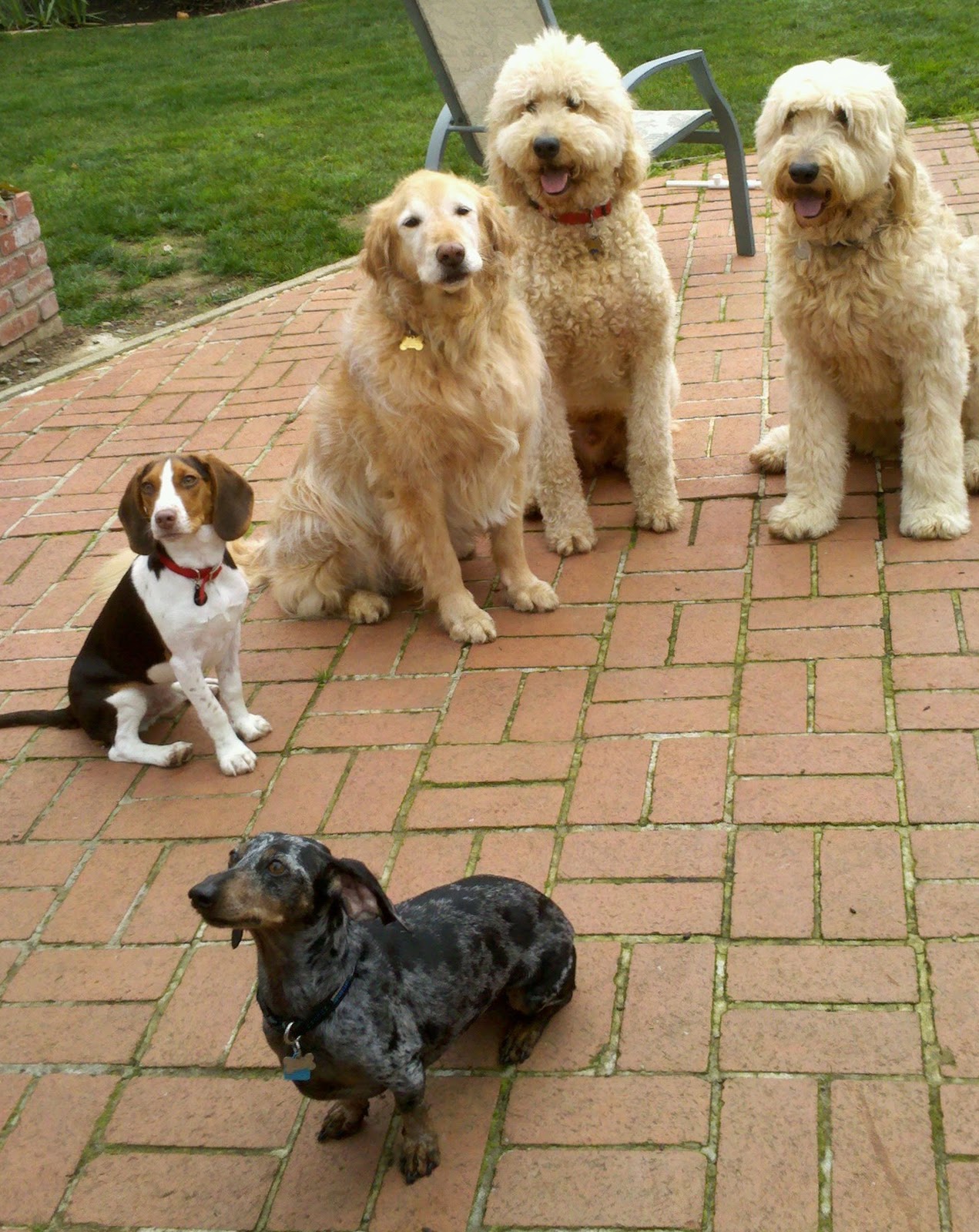
Each dog has its own personality, even if he's a "twin."

What if we like a friend’s dog of a certain breed?  Dogs of the same breed might share breed characteristics, like herding breeds being highly prey driven or scent hounds being easily distracted by smells.  But within the breed, there can be wide variations of personality based on parental temperament, early puppyhood experiences, and training.  The dogs might resemble each other, but don’t expect them to be the same dog.  Not all Dachshunds are alike nor are all Labradors.  That’s a good thing.  Variety is the spice of life.

Sibling dogs within the same litter theoretically have more in common.  However, it’s possible for there to be more than one sire for one litter since dogs have a uterus shaped similarly to a glove. Even with the same parents, dogs can have very different personalities, just like human siblings.  When raising puppy siblings together, there is the additional complication that they tend to bind to each other more than to their human, especially if the human doesn’t purposely take time to work with each dog separately.  The type of interaction with we have with each dog also shapes the dog’s personality, and of course, our relationship with him or her.  With the dogs side-by-side, it also makes it easier to draw comparisons, which can sometimes be unfair.

It’s a natural inclination to make comparisons between dogs, especially after one dog has given us so many happy memories.  But it’s also important to remember that each dog is an individual and special in its own right.  We should respect and appreciate him or her for his or her own wonderful qualities. Once we allow ourselves to do so, it’s amazing to discover that there are so many “perfect” dogs out there and a place in our hearts for all of them.  We just have to learn that “perfect” takes many different forms.

Sunday, October 2, 2011

Living in the Literal World

Seeing isn't necessarily believing!
Keeping in the Halloween spirit, there’s been an online trend called “Horsemanning.”  Horsemanning is creating an undoctored photograph that looks like a decapitated body with a head next to it.  What makes it entertaining is that observers know that what they’re seeing is not real.  It’s just an optical illusion.  But what if we weren’t sure?  What if we took the photos for exactly what they represented?  That’s how a dog would perceive the picture.

Dogs are literal thinkers that lack gestalt.  In other words, they are incapable of creating a whole picture when given just parts.  For humans, this is the ability to see the picture in a dot-to-dot, for example, before the dots are connected or to know that when someone walks behind a curtain they are behind the curtain.  This is a learned behavior, which is why young children need to connect the dots in order to see the picture and why peek-a-boo is so entertaining for infants.  Dogs never develop this capability to the same extent as people.  So, when Bob the neighbor walks by behind a wall and only his head is visible, dogs do not assume that the rest of Bob’s body is behind the wall.  Bob’s head is a floating head.  Scary.  When a dog buddy goes home and then goes out into the yard behind the fence, it becomes mysterious disembodied dog.  Scary. It only becomes a buddy again when completely viewed.  Some dogs do learn object permanence, which is knowing things exist, even if they can no longer see it.  If they watch a treat being covered by a cup, they assume that the object remains under the cup.

Literal thinking can also apply to clothing accessories, especially costumes.  Dogs that are unfamiliar with people wearing hats, sunglasses, or even roller skates are seeing bizarre “whole” pictures:  humans with oddly extended heads, frighteningly large eyes, or fast noisy feet.  Costumes aren’t costumes but “real,” which is confusing and frightening for dogs and even young children, who have a similar perception of the world.  Dogs familiar with other dogs can suddenly become frightened of the walking hot dog with their friend’s face.  Despite the strong reliance on scent, a dog’s survival skills prioritize unusual over the familiar.

In addition, dogs base their vision of the world on previous experiences.  They might be able to combine previous experiences into novel combinations, but if they haven’t seen an item before or experienced something before, in their minds it doesn’t exist.   For example, if a dog only goes for walks in the neighborhood and on occasional trips to the vet, when you leave the house, in the dog’s mind you, too, are only going to a walk around the block or to the vets.  The scent information you bring home creates a complicated picture because it doesn’t match with the dog’s knowledge base.  Seeing something even slightly different, such as a person who walks differently or who has hair on his face is an oddity first and human only after safety is established.

New experiences can be disturbing unless most
previous new experiences are positive.
Personality and experience dictate how a dog reacts to new items and situations.  Dogs categorize everything into three categories:  Bad/Dangerous, Neutral, or Good/Beneficial.   That’s why it’s so important for puppies to be exposed to many different people and situations in a positive manner.  If their memory bank is full of good or neutral experiences, they are more apt to expect new experiences to also be good or neutral.  Bad experiences would be seen as “abnormalities,” making the dog more confident and willing to try other new situations.  However, dogs that are genetically inclined to be shy, like shy people, might still be more hesitant in new situations, although not as hesitant as a dog that has had predominantly no experience or bad experiences with novelty.

We can help our dogs to become more comfortable around new situations.  Regularly introducing something safe and new to something already comfortable and familiar can make novelty less threatening.  Preventing or intervening when there is a potential “bad” experience in a new situation can not only build confidence, but increase our dogs’ trust in us.  Not forcing our dogs to go beyond their comfort zone can also help bring confidence.  Allowing dogs to advance on their own into new situations while we give encouragement and incentives can create good associations as well. When dogs know they can trust us to protect them and that we “have their back,” “new” can go from scary to an opportunity for discovery. And that’s money in the experience bank!


Wednesday, September 14, 2011

Feel the (Brain) Burn

For most dogs, just taking a walk isn't enough
Walking is a time honored tradition for most dog owners.   At the beginning and at the end of the day, we pop the leash onto our furry friend and take our morning/evening constitutional.  Hopefully, it’s some enjoyable time to spend with our dogs, but there is usually a secondary purpose for the walk.  Often times, this journey is a potty break. Sometimes, it’s exploration and investigation time.  Most of the time, we consider a walk our pets’ main exercise.  However, vets and animal behaviorists believe that medium to large dogs should ideally have 2 ½ hours of high energy exercise to maintain optimal health.


Unfortunately,  most of us don’t have the time or space to exercise our dogs at that level, so we need to think of other ways to burn off our dogs’ energy.  One way is to combine brain energy with muscle energy.  Sniffing, practicing obedience, and playing are all ways to help dogs work harder while on their everyday walk.

While it might seem like letting your dog sniff is a time killer, think of it as your dog catching up on the latest news.  Dogs gain most of their information about the world through their olfactory system.  When they sniff an item, they’re learning all about the neighborhood and its passer-bys.  They need to use their brain power to sort this information and make sense of it.  We can learn a little about what dogs discover through scent by watching what our dogs do after sniffing:  Look around?  Look up?  Urinate over the scent?  Kick?  Get excited?  Once you let your dog sniff, you’ll find that certain areas are more interesting than other areas, kind of like following a certain story or news item.  For dogs that love sniffing, the freedom to “go sniff” can even be used as a reward during training.

Practicing cues while on a walk increases your dog's attention
to you and can help your dog become more responsive.
Practicing obedience cues can also make walks more interesting.   Even better, the walk can become a  working breakfast by using kibbles with a little fish oil or powdered parmesan cheese (or both) for treats!  The stop and go, mixing up of commands, and different locations can make the walk more challenging.  Don’t be surprised if your dog doesn’t respond at first to your cues.  Just like students don’t expect to do math in history class, your dog won’t expect obedience cues during the daily walk.  Be patient and start from scratch, using lures like you did when you first taught your dog “sit” and “down.”  Once your dog learns that these words mean the same thing during a walk as they do at home and in class, the responses will come much faster.  With a hungry dog eager for treats, your dog should start responding quickly and enthusiastically.  You’ll find that your dog will become not only excited about walks, but excited about obedience, and will become a much better listener!

Playing while walking can also make the walk more interesting.  Change up the pace by running and walking and slowing down for a house or two at a time.  Walk backwards with your dog walking towards you (be sure there aren’t any on-coming dogs or potentially startling barkers behind fences).  Teach your dog to walk on your right AND left and switch sides.  Skip, hop, or walk in a zig-zag pattern.  Attach the leash to a harness instead of a collar so the speed changes won’t injure your dog and give your dog cues so that your dog will know things are changing.  Once your dog catches on, he or she will learn to watch you closely to know when a change is coming.

Stick to obedience or speed changes for several weeks until your dog learns to watch you for the next cue.  Once you have your dog’s full attention, and he or she starts to anticipate a cue, you can introduce either speed or obedience and keep to the new routine for a few days, then return to the previous routine.  Once your dog becomes “fluent” in obedience and speed cues, you can mix and match.  This will not only make walks more brain energy intense, it will make it more fun and interesting for both of you.  Even better, you’ll find that your dog will pay more attention to you, less attention to other dogs and people, and become more responsive to cues.

Best of all, you and your super attentive and responsive buddy will become the envy of the neighborhood, inspiring other dog owners to make an ordinary promenade into an outdoor adventure.

Thursday, September 1, 2011

September Newsletter: Totaling the Stress Points

Some stress is unavoidable, but too much stress or
unresolved stress can be damaging and dangerous.
The alarm didn’t go off.  The shirt you were going to wear is stained.  The cat threw up.  There’s only enough coffee left to make half a cup.  The kids need lunch money, but you only have a twenty.  There’s a leaf blower going outside.  The cell-phone wasn’t recharged.  The toast is burning.  The land-line phone rings.

“WHAT?” you say when you pick up the phone, just to stop it from ringing.

It’s rare that there’s only one stressor that takes us to our breaking point.  It’s usually the accumulation of many small stressors combined that make us “snap”.  The same can happen with our dogs.  Unless there is a health issue or traumatic event, most behavior changes occur when the dog is overwhelmed.

Stress happens when there is a conflict between a familiar or desired situation and the current situation.  If a shirt out of the closet is usually clean, but the one pulled out is stained, stress is created.  If the stain can be removed or another clean shirt is available, the status quo has returned and the stress fades.  If a dog is fed at 6 p.m. every day and at 6:15 the dog still hasn’t been fed, stress is created.  Feed the dog and the stress diminishes.  But if the stressful situation doesn’t return to “normal,” the stress remains.  Additional unresolved stress builds, resulting in a variety of undesirable behaviors, such as snapping, growling or barking at other dogs, guests, strangers, and sometimes even family members.

We might not always know what is causing our dogs stress and some things that stress our dogs may seem innocuous to us.  Because of this, it’s important to identify stress signals before the breaking point is reached.  If we can identify that our dogs are stressed, we can start looking for ways to reduce the stress.

Some stress symptoms are physical.  A common symptom is panting.  Dogs also pant to cool themselves during warm weather or after exercise.  But, if the dog pants every time you return home or, the dog starts panting before you leave, for example, that is stress. Another common sign is lip licking, similar to the “dry mouth” sensation people get when they are nervous.  Restlessness is another sign.  If the dog has difficulty settling, it is stressed.  Some dogs will drop or pin back their ears.  Some dogs develop sweaty paws. Some dogs suddenly start losing their hair.  Whining can happen at higher stress levels.

Normal behaviors done at inappropriate times are also signs of stress.  Stressed dogs will yawn, scratch, or sniff, all normal behaviors if the dog is tired, has fleas, or finds something interesting on the floor.  But if the dog is supposed to be doing something else and abruptly stops, then starts one of the displacement behaviors, that is a sign of stress.  Imagine scratching your head as you’re trying to think of an answer on a difficult test.  Drinking, urinating/defecating, and eating can also be signs of stress if done suddenly or obsessively (remember all the trips to the bathroom and drinking fountain at your first dance?).

Lick granuloma or lick wound
In addition, what some people think of as “spiteful” behaviors can be expressions of stress.  This can include demand and repetitive barking, shadowing (following people everywhere), ripping up furniture, digging, going through trash, and “loss” of house training habits.  Granulomas (sores on the paws or hip) can appear from obsessive licking, a dog taking a soothing behavior to the extreme.  Separation anxiety, although rarer than previously thought, is another sign of stress.

Once we discover our dog is stressed, the next challenge is to help our dog relax.  We need to find the stressor and ideally remove or stop the cause of stress.  But, that can’t always happen, at which point there are three possible solutions:  habituation, desensitization, or training a coping behavior.  Habituation, the dog ‘getting used to” a situation, can happen if the stress is perceived as non-threatening.  The loss of a household member, like a death or a child leaving for college, can be very stressful, but by keeping to the routine, many dogs will adjust to the change.  Desensitization is training the dog that a perceived threat, such as a vacuum cleaner, is not actually dangerous.   Although the “threat” might seem irrational, emotional reactions, like fear, aren’t based on “rationality” and are therefore difficult to overcome.  Training a coping behavior can help build confidence, and with more confidence, fear and stress diminish.  For example, dogs that stress about strangers in the house, can be taught to go to their crate when guests arrive.  People and animals become calmer when they have control over their environment and when they know what to do when in a stressful situation.   

Rest and relaxation are important for dogs and people
Keeping our dogs relaxed is important for their mental and physical health.  Comfortable dogs  keep us from becoming stressed as well.  If you know a stressful time will be approaching, prepare your dog.  Try to keep as closely to the familiar routine as possible.  Increase exercise, particularly in the morning if you’re going to be away for the day.  If there is going to be construction on your house or a neighbor’s, see if day care is available.  Finally, if your dog is stressed, but you don’t know the cause, or don’t know how to diminish the stress, call a private trainer. Just knowing help is on the way can make life calmer.


Friday, August 12, 2011

Playing the Wingman

“Oh jeeze!  DON’T look!”
“What?”
“Oh, man, That Person is coming this way.”
You and your friend look at the table, the lint on your sleeve, the ice in your glass, your cell phone.  Anywhere but up.
An arm lands on your shoulder.
“Heeeeeey, what are you folks up to tonight?” That Person says.

Do you:

A.    Smile and make nice, hoping That Person will find someone else to bother … SOON!
B.     Tell That Person that you and your friend are having a private discussion.
C.     Don’t say or do anything and hope That Person will go away
D.    Get up and leave
E. Tell That Person to get lost.

We’ve all had this experience at least once.  That Person is often a stranger, can be male or female, and usually isn’t life threatening.  So why is it that we don’t want to meet or even make eye contact with That Person?  Something about That Person makes us uncomfortable.  It’s an aura or scent or something that gives us a bad first impression and the following non-responsiveness to the social cues we’re giving (averted eyes, appearing busy with something, disinterest in the approach) and invasion of personal space further confirm the first impression.  Our response to That Person is determined by our personality and by our previous experiences with similar people and their reaction to our responses.

Are any of the responses wrong? What if That Person doesn’t leave and becomes increasingly obnoxious and invasive?  Is there a point where yelling becomes appropriate?  What about violence? 

As human beings, most of us do not like everybody.  Most of us learn that not everyone will like us.  We use our social skills to be polite and courteous, but we expect others to respect our boundaries and our preferences.  But what happens when these boundaries are crossed?  We have a right to defend our boundaries and ourselves to various degrees.

Going back to the situation, what if your friend, your “wingman,” disagrees with your response? What if your “wingman” sides with That Person?  We expect our friend to side with us, defend us, if necessary, run interference.  Goose to our Maverick, Sam to our Michael Weston, Butch to our Sundance, Ethel to our Lucy.  A good wingman can diffuse the situation, can prevent violence.  Knowing someone has our back makes us feel safe and confident.

Trust your dog's instinct about That Dog
Let’s replay the above scene, dog version.

You and your dog are out for a walk.  Your dog sees That Dog.  Your dog looks away, sniffs at the grass, sits and scratches itself.  The other dog hurries closer, wants to touch noses and sniff your dog’s butt.

The options are more complex this time.  Your dog is bound to you and cannot leave since it is on leash.  Does your dog:

A.   A. Slowly wag its tail and allow the other dog to come nose to nose, sniff butts … and hope the other dog will stop there and leave
B.     Stand stiffly and stare (possibly growl) at the other dog
C.     Stand still, look away, and refuse to interact
D.    Go behind you or as far away from the other dog as the leash will permit
E.     Bark, lunge, and snarl at the dog to prevent it from coming any closer

A dog’s response is similar to a human’s in that it’s based on personality and past experiences.  Did That Dog become increasingly invasive?  Did That Dog attack?  Most importantly, because the dog is restrained on a leash, what did the handler do?


As guardians for our dogs, we have an obligation to teach our dogs proper social skills.  But we also have a responsibility to have our dogs’ back when That Dog is ignoring the proper signals.  With the flight option gone, without our intervention, the last option available for a dog on leash is to fight. 


Ideally, we should be our dog’s “wingman,” scoping out the area for That Dog.  It’s hard to tell who it will be, but it’s usually an off-leash dog charging at your dog.  Despite what the human behind That Dog says, a rushing dog is NOT friendly.  It’s rude.  The approached dog can’t read the body language since it’s the “narrow part” that’s facing him.  A human stranger running towards me would make me nervous as well.  Any species running at another species is suspicious at the very least.  A dog’s response is normally to stand at high alert, ready to fight (since it’s on leash) just in case the rush turns bad.  As the “wingman,” we should step between the dogs and walk away.  If That Dog slows, lowers its head and walks alongside, then it’s up to your dog if the meet should continue.

Looking away, doing other behaviors such as sniffing the ground or and scratching are a dog’s way of saying I’m not interested.  There is no reason to allow another dog to sniff your dog if your dog is uncomfortable.  There is a reason why your dog is uncomfortable.  If sniffing starts, a polite sniff lasts no more than 1-2 seconds.  Any longer, and That Dog is violating your dog’s space.  Step between the dogs and move on.

Most people find that once their dogs can rely on their handlers to intervene on their behalf, they become less nervous about other dogs.    These dogs can become more relaxed and confident when other dogs approach them.

Finally, don’t let your dog be That Dog.  Teach your dog proper social skills.  If another dog looks away from your dog, teach your dog to come to you and respect the other dog’s disinterest.  If your dog is pulling and dragging you to go see another dog, don’t reward the behavior by allowing it to greet the other dog.  Teach him to play it cool (turn around, go the opposite direction, then try again more calmly).  Your dog doesn’t need to force itself to be “friends” with all other dogs.  A few select dog friends are fine.  In fact, your dog really doesn’t need to have any dog friends.  He’s got the best friend and wingman in the world:  You.

Monday, August 1, 2011

The Pre-Owned Problem - August Newsletter


Shelter dogs tend to be good dogs who were never trained.


When I was around 8 years old, my parents decided we could get a dog. I asked my father if we could adopt a dog from the pound. He replied, “Why would we want to take home someone else’s problem?” He knew of what he spoke. 10 years earlier, he had found a dog and took it in. He later sent it to the pound because it constantly jumped the fence and took off after bicyclists and cars (no doubt partially due to my birth and the dog's relocation to the yard and what amounted to solitary confinement). So, my father interviewed several breeders, found one with dogs of good temperament, then evaluated and bought one of their puppies. We house trained Baron,and taught him the basics of sit, down, stay, and come, a few tricks, and how to heel on leash. We had a wonderful family dog who lived with us until he passed away from cancer at the decent age (for that time) of 13 years.
Still, once on my own, I vowed to only have shelter/rescue dogs.  Six dogs later and having volunteered and worked in a shelter, I have to admit my father’s remark has an element of truth to it, especially when adopting adult dogs.  Unless picked up as a stray, an adult dog winds up in a shelter because its was a financial, emotional, and/or physical “problem” for the family.  With the majority of shelter dogs between 9 – 24 months old (dog adolescence) with little to no training, the likely scenario is that the cute puppy with puppy behaviors grew up to be a bigger dog with the same behaviors.  Puppy piddles became doggy puddles.  Jumping play with puppy teeth became rough play with hard pressure dog fangs.  


To make matters more complicated, it usually takes a few months between considering surrendering a dog to a shelter and actually taking it to the shelter, which means the owner's frustration level has increased greatly, usually involving banishing the dog to an out of the way area (as my father did) such as the yard, garage, or basement before making the final decision to get rid of "the problem."  This can create secondary problems, such as barrier frustration and a lack of socialization with people, environments, and other dogs.  Basically, the problem with most shelter dogs is that they were never taught appropriate behaviors for home living.  But that doesn’t mean they can’t learn.

The most important thing for shelter dog adopters to realize is that age does not necessarily equal training.  Assume the dog has never been trained and knows no house rules.  In other words, and treat the adult dog like a puppy.  Take the dog to the vet to make sure it is healthy.  Restrict the dog to one room at first to keep the dog from becoming overwhelmed, to get an idea of what the dog already knows, and to contain any potential damage.  Crate training can be helpful.  Do not leave the dog loose in the yard or house while unsupervised.  Housetrain (even if the dog seems to know), teach the dog to respond to its new name, and take basic manners classes.   Don’t take it to the dog park until it knows its name, reliably comes when called, and you know that it gets along with other dogs.  Plan for the worst, but hope for the best.  Remember that even at best, the dog won’t know your specific rules.   Be consistent and patient.  The dog isn’t being spiteful, stubborn, or stupid.  It just doesn’t know what’s expected.


Typically, the first few weeks to several months are a “honeymoon” period.  Many dogs have had several transitions before arriving at their new home.  They are under duress, evaluating the current circumstances, becoming accustomed to new routines, people, and even sounds.  They are learning what’s safe and what isn’t.  Once they start to feel comfortable with what has been allowed, they start to explore freedoms they want, like suddenly jumping up on the furniture or peeing in the house because no one has said that they couldn’t.  Have patience. Train and retrain.  It will go faster the second time.  You might also realize there are some rules you haven’t considered.


Some common issues such as barking at barriers, barking and lunging at other dogs while on leash, and a fearfulness of new environments and people might also appear. These often developed while the dog was in isolation before the family surrendered the dog.  Many shelters will have identified these issues and should supply guidance for how to help your new dog adjust. Private training can help the dogs adjust to your specific circumstances.


<><> <><> <><>
First impressions matter.  Don't force a match.
Shelter dog or purchased dog, if there is already a dog in the household, and you're adding another dog, use discretion.  Have the dogs meet before making a decision to bring in the new dog.  Introduce the potential new dog in neutral territory.   Generally, dogs of the opposite sex, with the resident dog being older have a better chance of getting along.     If you have more than one resident dog, introduce the dogs individually to the new dog, and then in combinations.    Don’t leave the new dog with the resident dog unsupervised until you are SURE they get along. 

Before adopting from a shelter/rescue group, do some research.  Find out how the shelter/rescue group determines a dog’s adoptability and if they use temperament testing.    Because even the best shelters can be stressful, a dog’s personality might change once it becomes comfortable in its home, it might become more or less active.  However, this could also happen with puppies transitioning into adulthood.  There are no guarantees with any living, learning creatures.

A great book for adult dog adopters is is Dr. Patricia McConnell's new book, Love Has No Age Limit.  It's short, readable, inexpensive, and written by an animal behaviorist (one of my favorite writers about dogs).  It's available on Dr. McConnell's website  as well as Amazon.  Even if you aren't planning on adopting an adult dog in the near future, I strongly recommend it for its insight.

Will my next dog be a shelter/rescue dog?  Absolutely, and most likely not a puppy since I prefer to by-pass the physical limitations and transitions of puppyhood.  Is a shelter dog for you?  With open eyes, an open heart, and patience you might be surprised to find that a shelter/rescue dog is no problem.  No problem at all.


Thursday, July 14, 2011

Dance Like No one is Watching: Digging the Paw-so Dog-lé

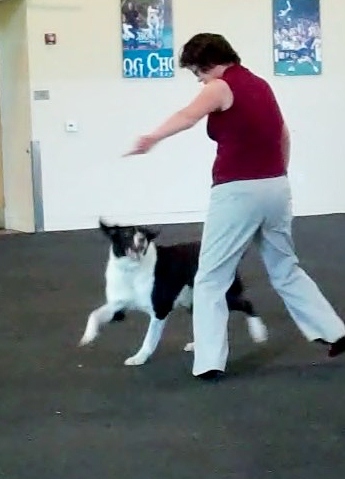
Rennie getting ready to spin.
I’m not an athletic person by any stretch of the imagination. However, I adore dancing.  I’m not good at it, but it makes me happy, and sometimes my body even decides to coincide with the movements in my mind.  And of course, I love dogs.  But even I was a bit wary when I first heard about dog dancing.  Visions of people and dogs wearing matching outfits, Len Gooddog, Bruno Spinoni, and Carrie Ann Ibizan Hound scoring, dogs samba-ing on two feet (yes, I’ve seen the YouTube video and all I can think is that poor dog’s back!)… a circus act, basically.  Not my thing.  Until I actually saw it.

As the former dog training coordinator at ARF, my office was in the Training Pavilion where all the classes took place.  On Friday nights, there is “dog dancing,” otherwise known as canine freestyle (“canine” added so no wannabe rappers show up?), taught by Judy Gamet, owner and creator of Dogs Can Dance.  I listened at first, bobbing and dancing in my chair as I worked at the computer.  Then, giving my eyes a break, I decided to check it out.  Interesting.  Basic commands put to music.  Kind of like aerobics.  I like aerobics (not that I ever do them).  Hmmm.  I put my research skills to work and looked it up on YouTube.  Wow.  Kate and Gin.  OMG WOW! Carolyn Scott and Rookie.  This is cool stuff!

However, time and finances made it easy to hold off on taking a class.  Then, Judy taught a freestyle portion in a Sports Sampler class, and again I took a break to watch.  What caught my eye was an older coonhound /rottie mix.  The owner was trying to get the dog involved in some sport and up until now, the dog had only shown courteous interest.  But all of a sudden, she was transformed!  Her ears went up.  She was prancing!  Her stub tail was moving in time to the music!  She had a little extra wiggle in her walk!  She looked like she was smiling at her handler, saying THIS is what I’m talking about!  Sure, it’s a little corny that it was Elvis’ “Hound Dog”, but what I would later see happening time and time again was that some dogs really enjoy certain music – not the same kind of music for every dog, but each dog has his or her own musical preference.  Apparently, music doesn’t just calm the savage beast, it inspires them.

Yoji, a collie/rockstar mix, is by far my more athletic dog – flying into the air, performing half-twists just to catch a deflated basketball, leaping over ravines on off-leash hikes, and infamously climbing six feet up into a pepper tree just to see what was on the other side of the fence.  I took him to a couple freestyle lessons, and he was o.k., but it was a little sedate for him – no flames or fog machines. At 12, Taro can still get his groove going – he did create the Jindo Hustle after all.  I thought about taking class with him.  However, recalling Rennie’s interest whenever I sashayed around the house with tunes blaring, he seemed the likely candidate.

Rennie, despite being mostly border collie, is almost as physically uncoordinated as I am.  He has mild hip dysplasia, but that doesn’t account for tumbling ass over tea kettle when he goes into zoomies, or falling off the edge of the porch if he’s not paying attention.  But what he lacks in physical prowess, he makes up for in enthusiasm.   He’ll play tug, shag after balls, and best of all, get silly with me without a moment of embarrassment or conscientiousness.  He’s all about the fun of the doing, a lesson I’ve taken to heart.

So, Rennie and I enrolled in freestyle classes.                              

Both of us were in love.  Spins, weaves, passes, cuts – they were all terrific.  Rennie was an eager learner and participant.  His tail keeping rhythm like a metronome, the two of us sailed across the pavilion floor like Fred and Ginger – at least in our minds.  Time sails by, and at the end of class, both of us are exhausted but happy.

I’m not a competitive person, but I am goal oriented and I like knowing when I’m doing well and where I can improve.  However, crowds make me uneasy, so I didn’t have any interest in performing in front of an audience.  The Dog Can Dance Challenge allows dogs and handlers to earn titles by submitting videos that fulfill set guidelines.  Whew!  No live performance necessary!  The challenge is also open to teams (multiple dogs) as well as to dogs and handlers that have limitations based on health and age.  The emphasis of the challenge is on handling skills that showcase the dog.

The Dogs Can Dance Challenge appealed to me, so Rennie and I registered and have just passed our entry level, which focused primarily on handler skills and handler comprehension of freestyle terms.  You can watch a portion of our entry levels.

Completing "Around"
Joining the Dogs Can Dance Challenge wasn’t so much about getting a title as doing something that Rennie and I enjoy doing together (he certainly doesn’t care about letters).  Freestyle has improved our communication and expanded our training vocabulary.  We practice daily in a quiet corner of the local park, usually with me humming or singing off –key.  With the two of us focusing on each other, laughing and having fun, it’s like the rest of the world disappears.  Ren, who can be reactive, suddenly ignores passing dogs, bicycles, and people.  That’s when I know it’s good, when Ren and I can be free to dance like no one is watching.  And it’s good.
Creative Commons License
Doglish by Kou K. Nelson is licensed under a Creative Commons Attribution-NonCommercial-NoDerivs 3.0 Unported License.
Based on a work at www.thecollaborativedog.blogspot.com.
Permissions beyond the scope of this license may be available at www.kouknelson.com.